Cornucopia
Abstract
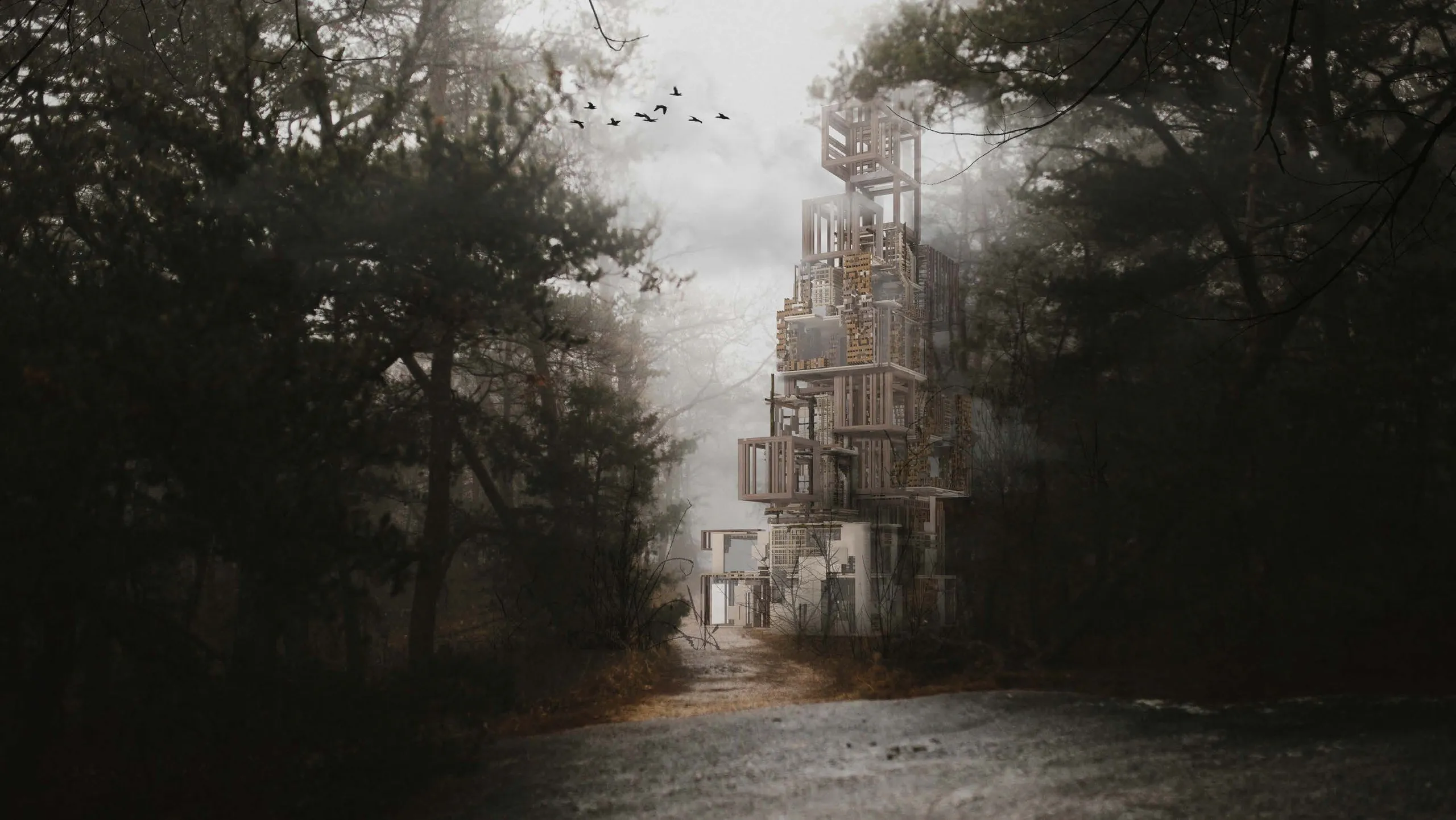
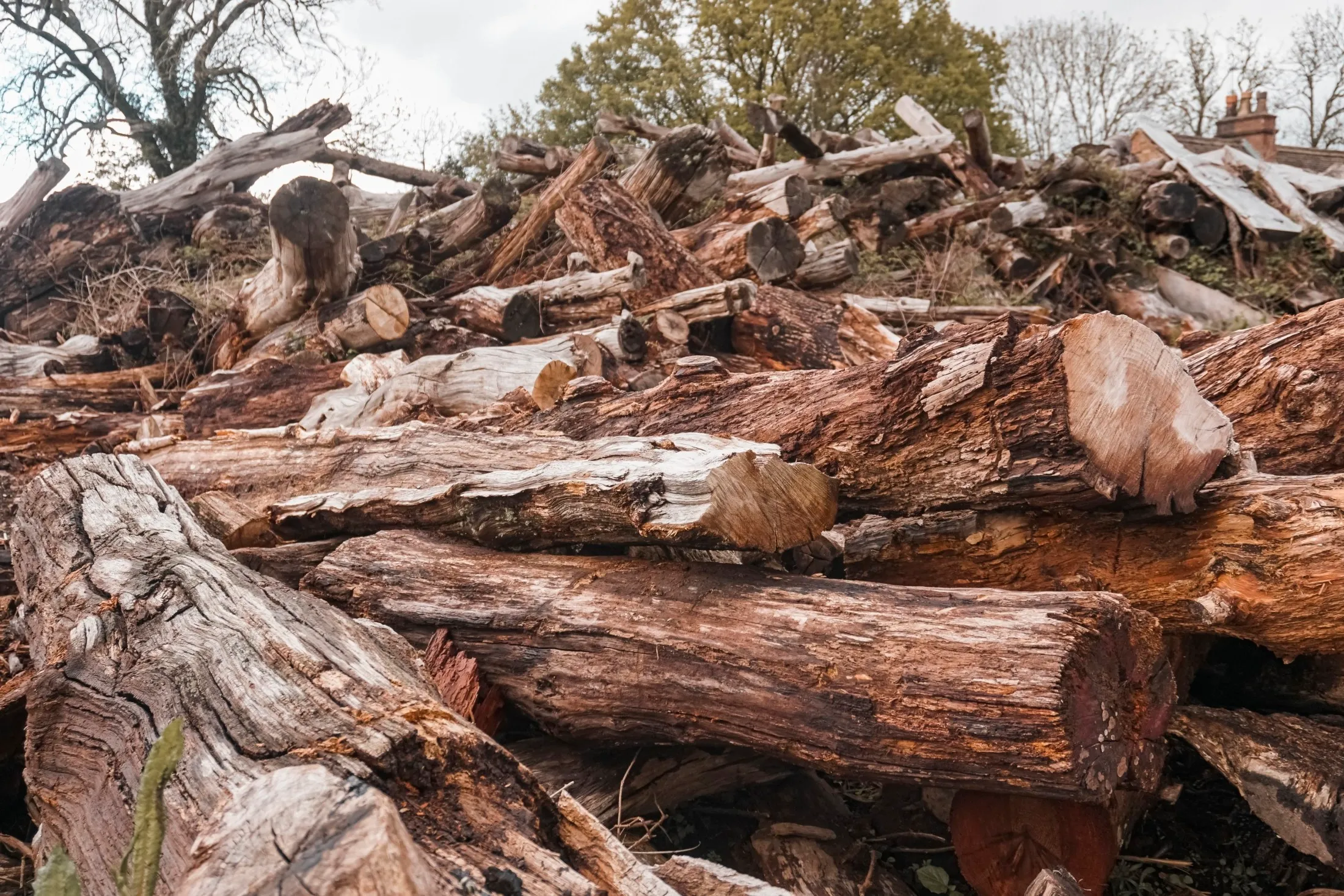
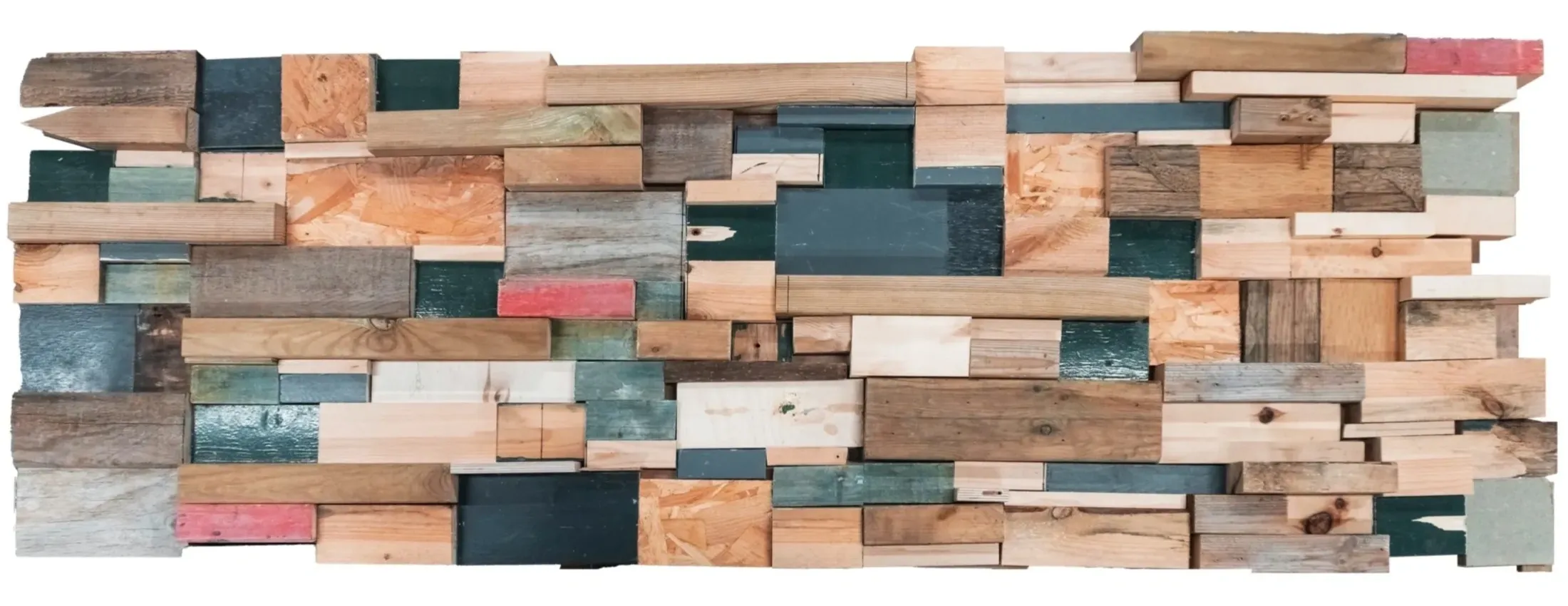
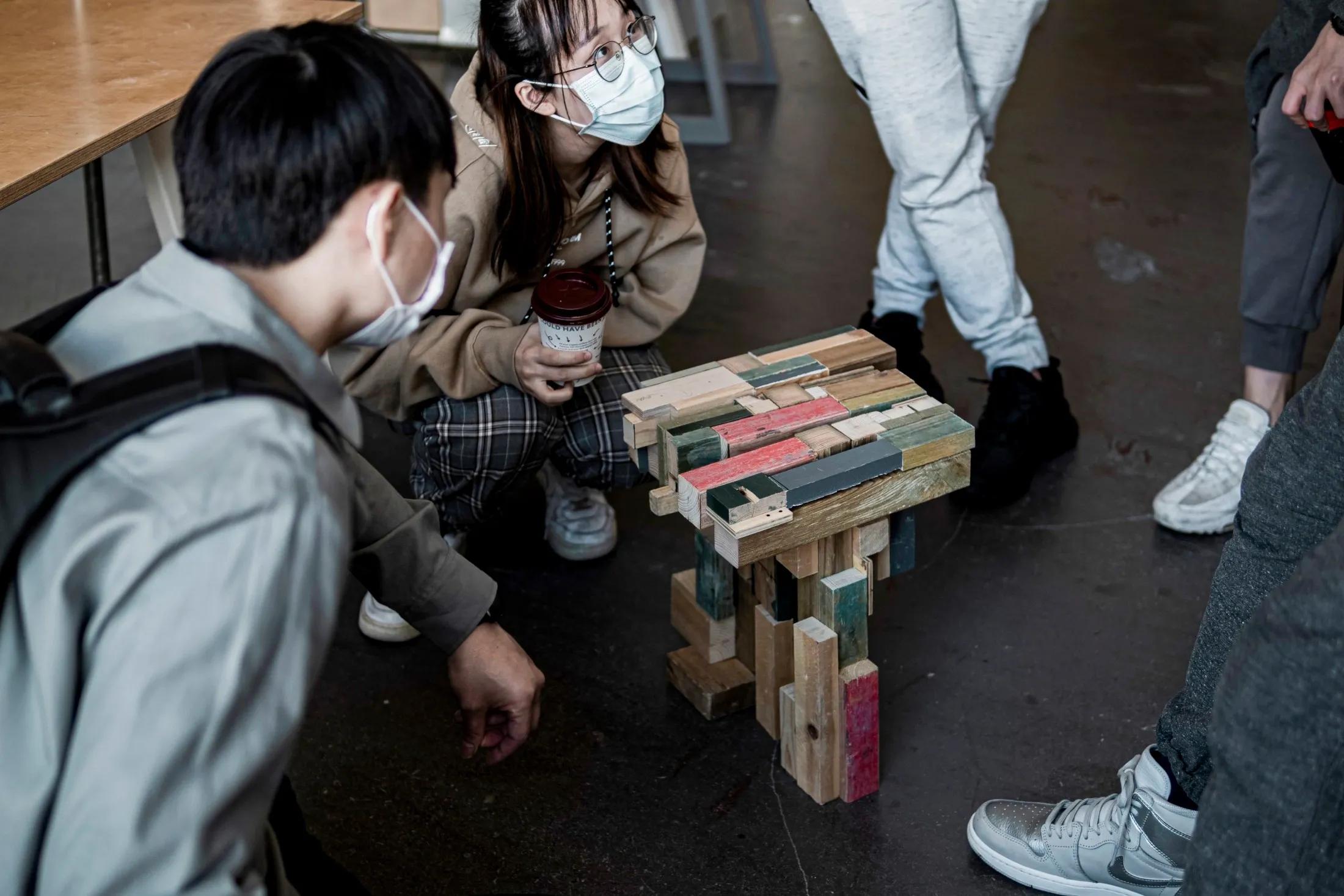
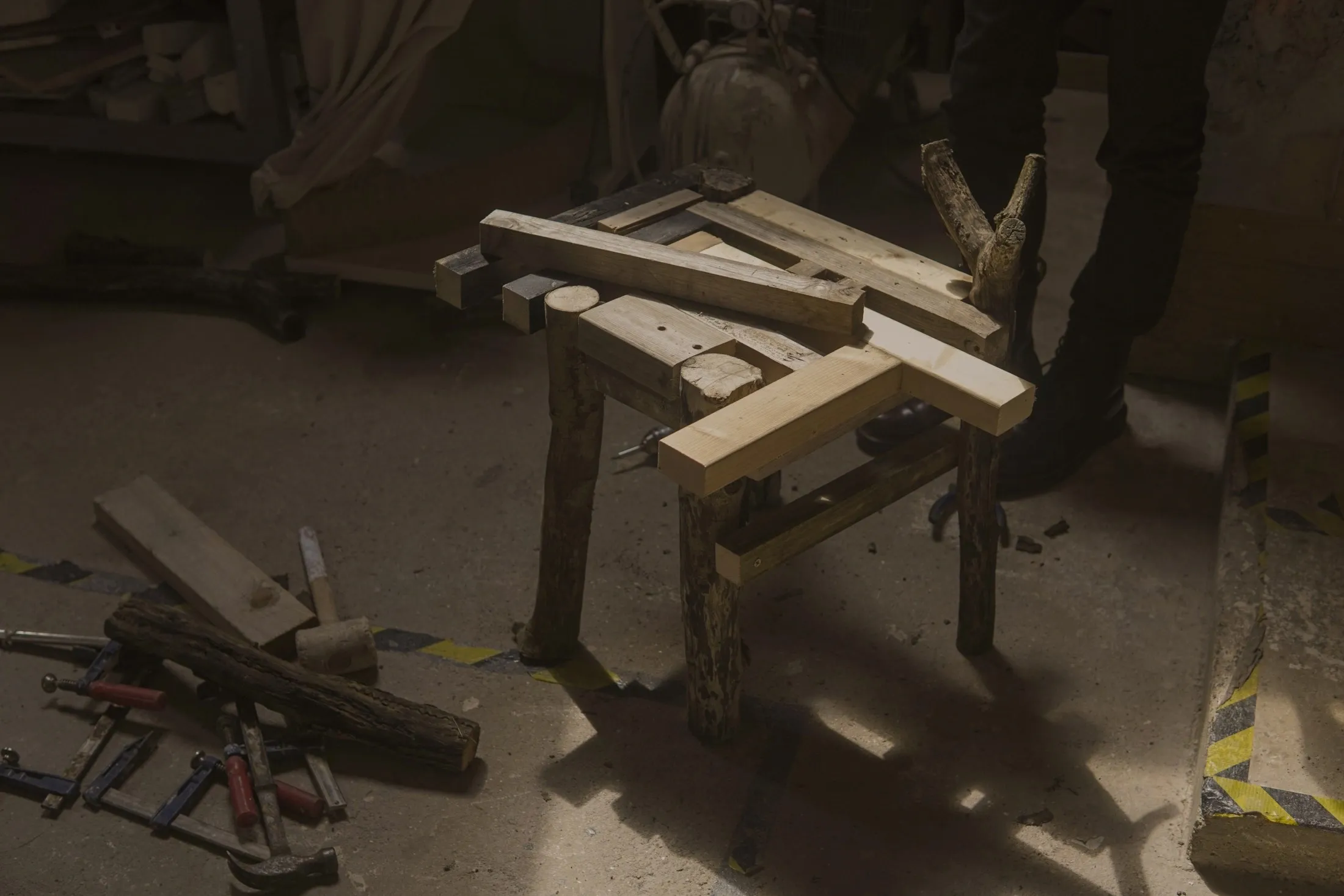
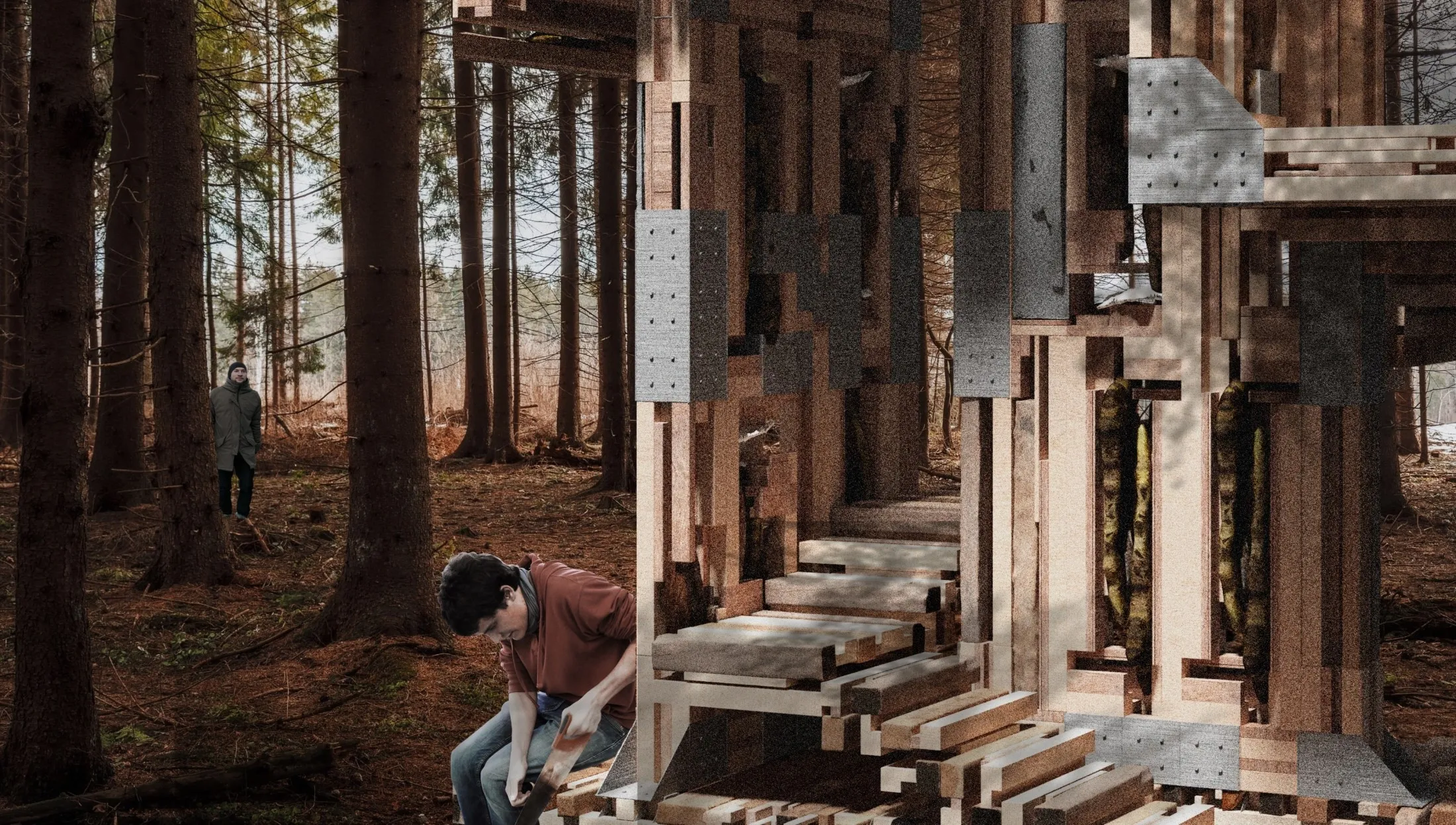
This project considers the undervalued resource of used, waste, and off-cut wood as a new language for discrete architectural components. Instead of downcycling useful timber, it taps into this large waste resource to keep more timber products in use.
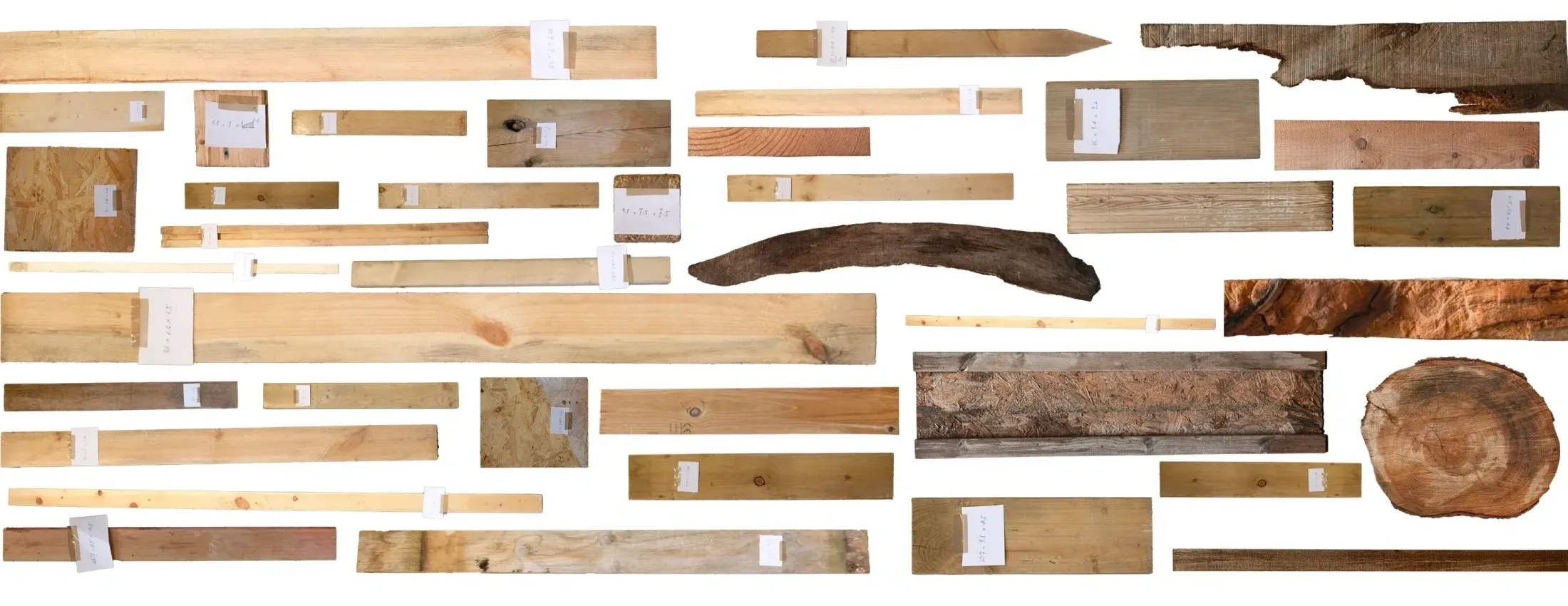
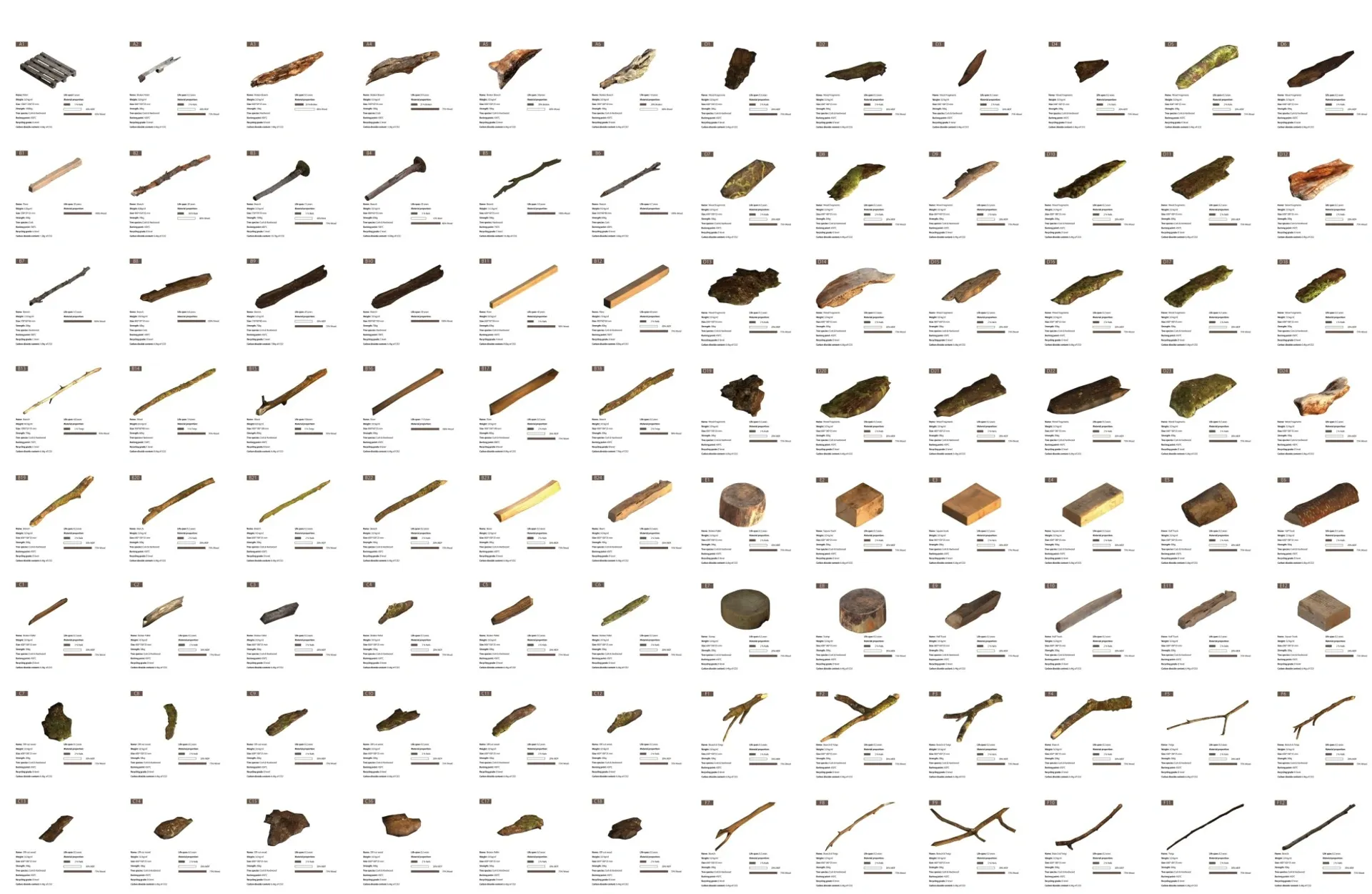
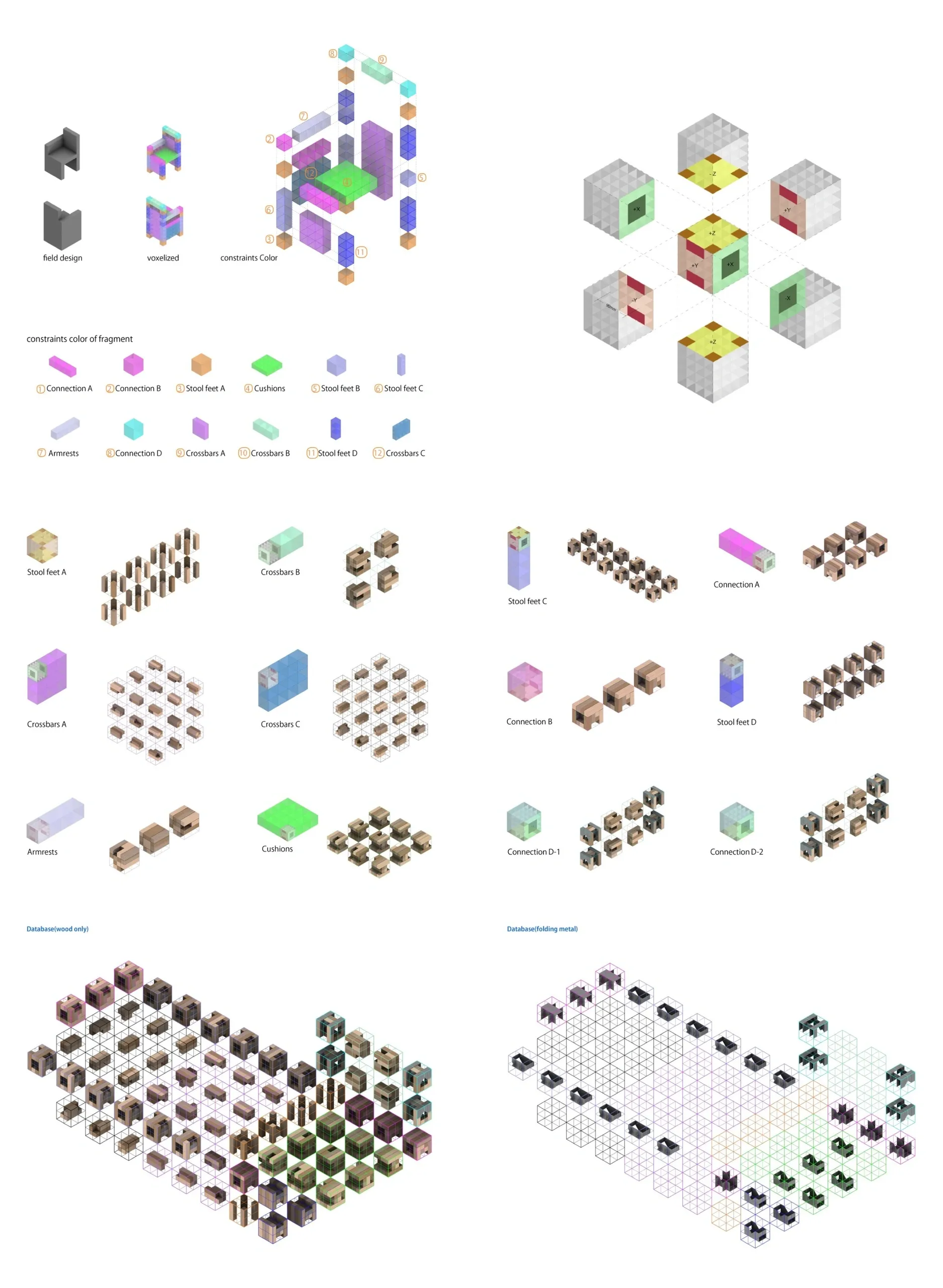
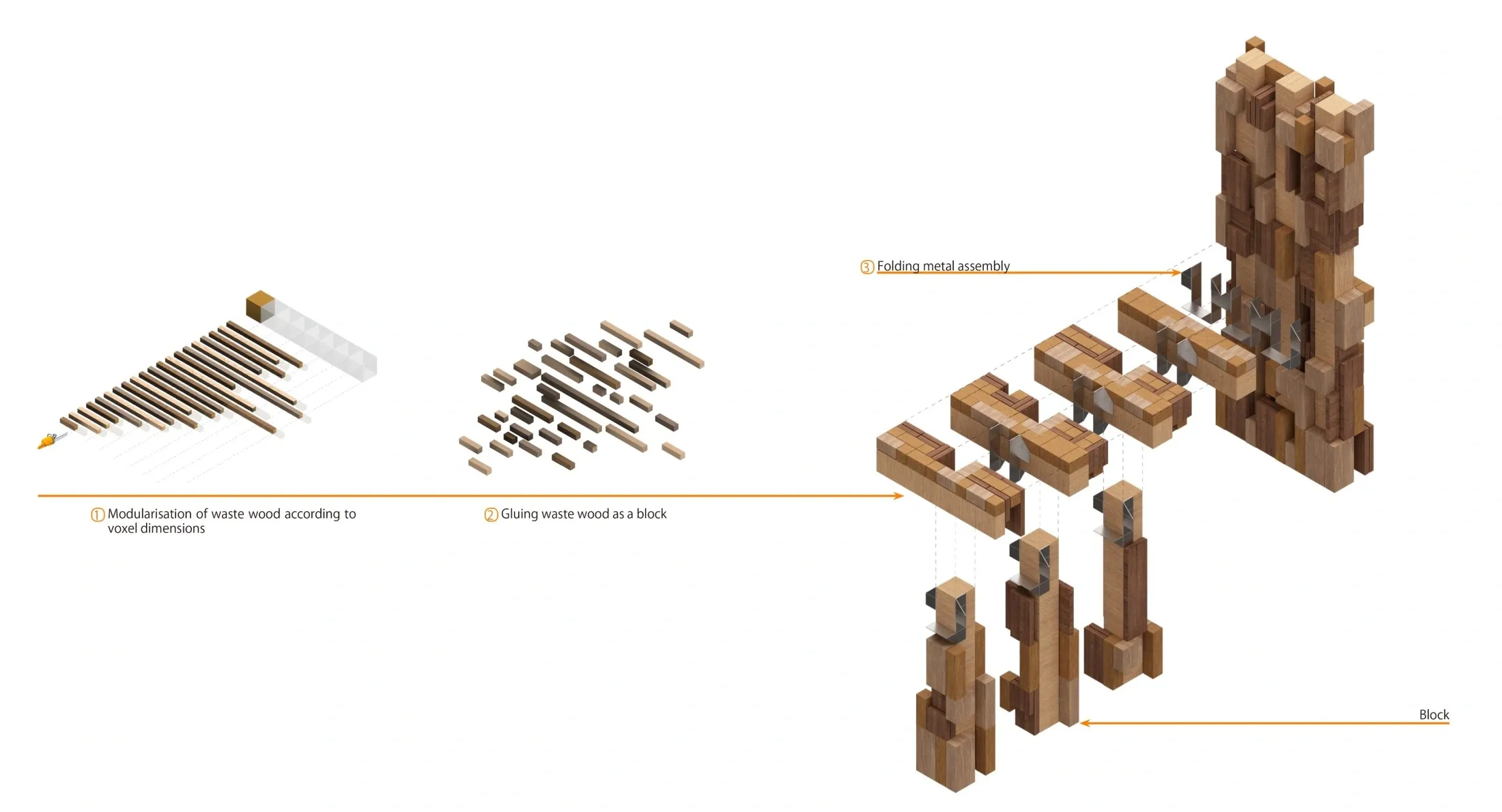
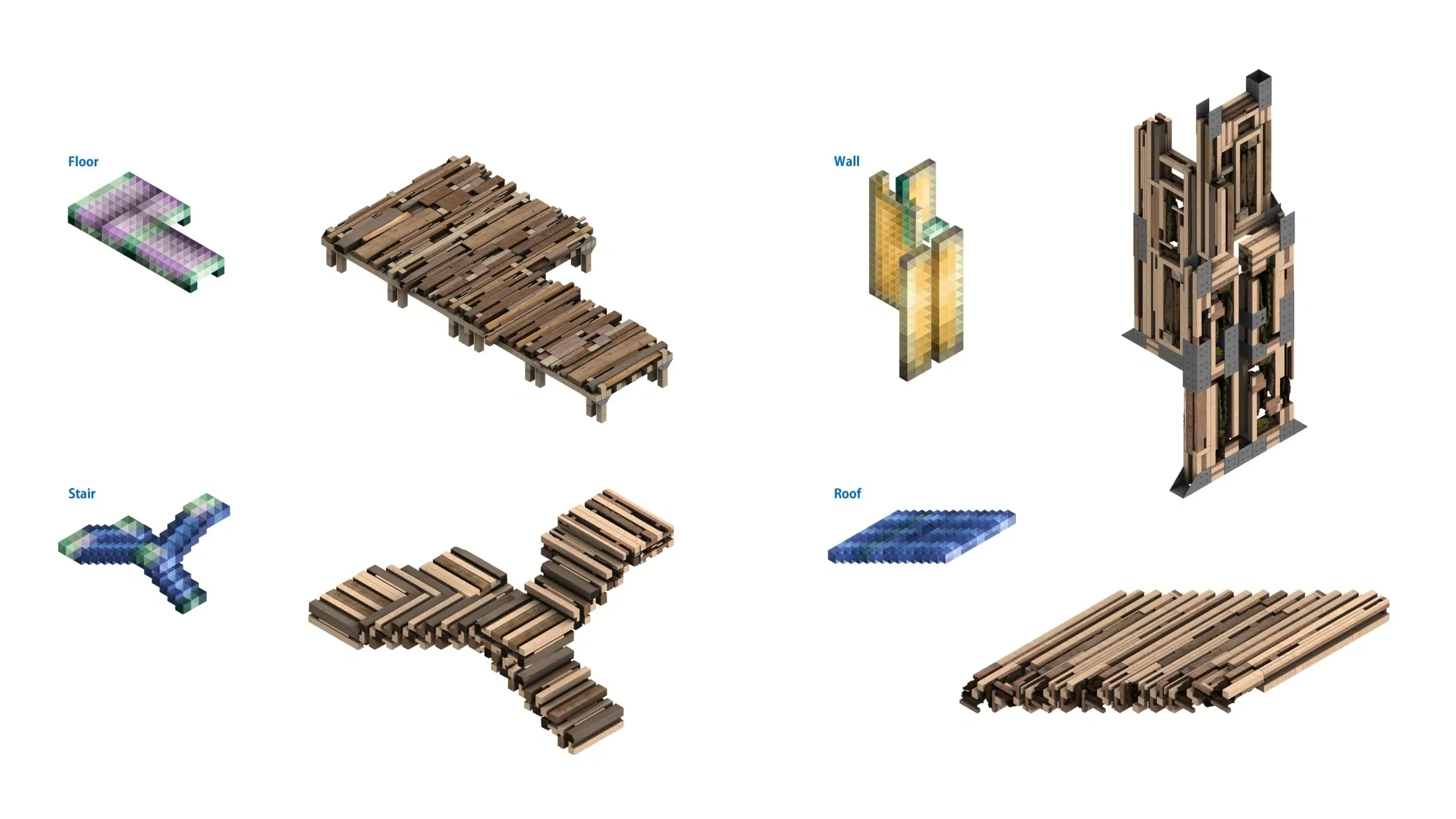
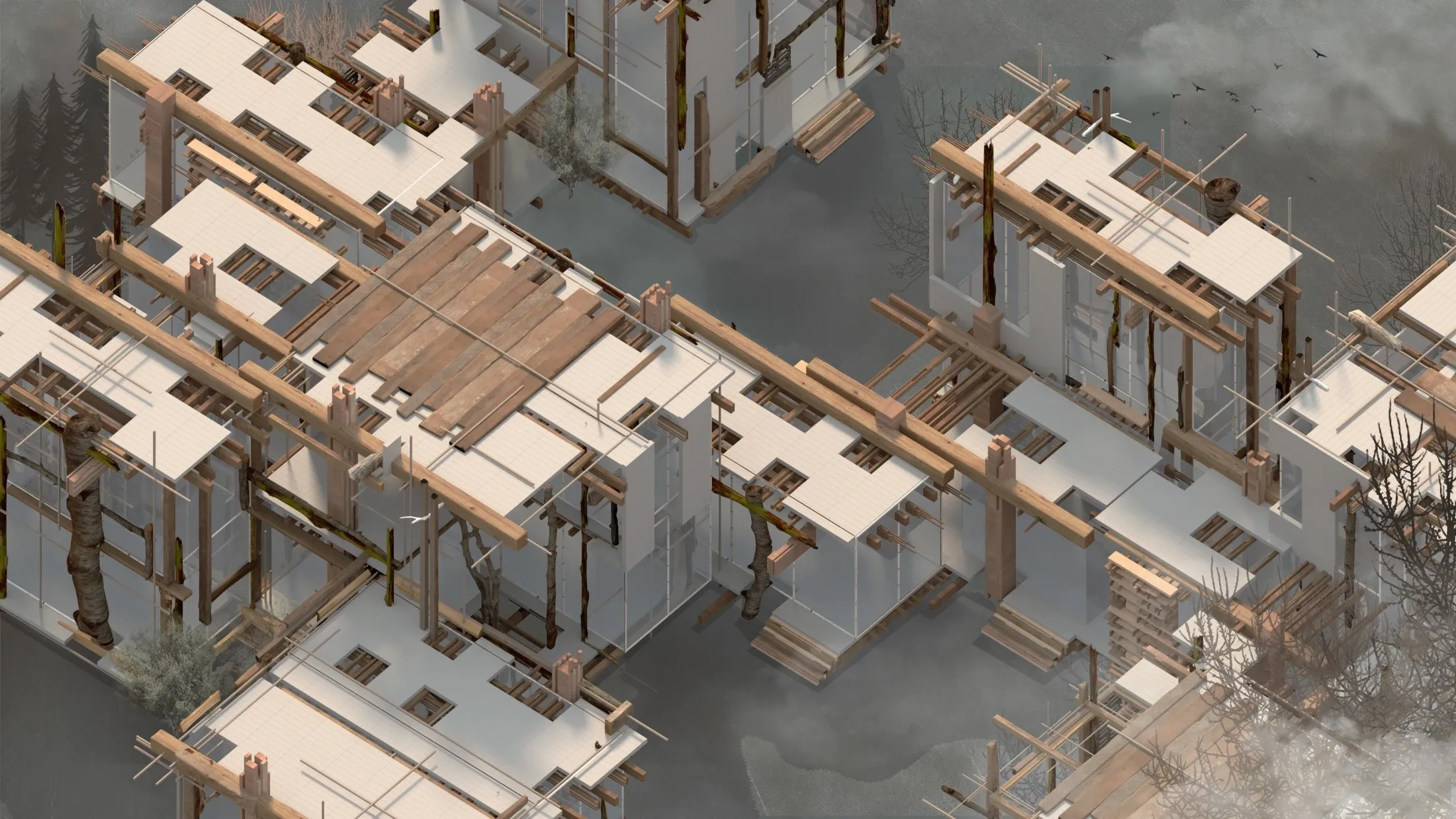
Off-cuts are categorised by sectional dimensions, modularised to set lengths, then packed and reconfigured into digital voxel sets. These are aggregated using the Wave Function Collapse algorithm to create larger, specific formations, joined by folded metal connectors for assembly and reconfiguration.
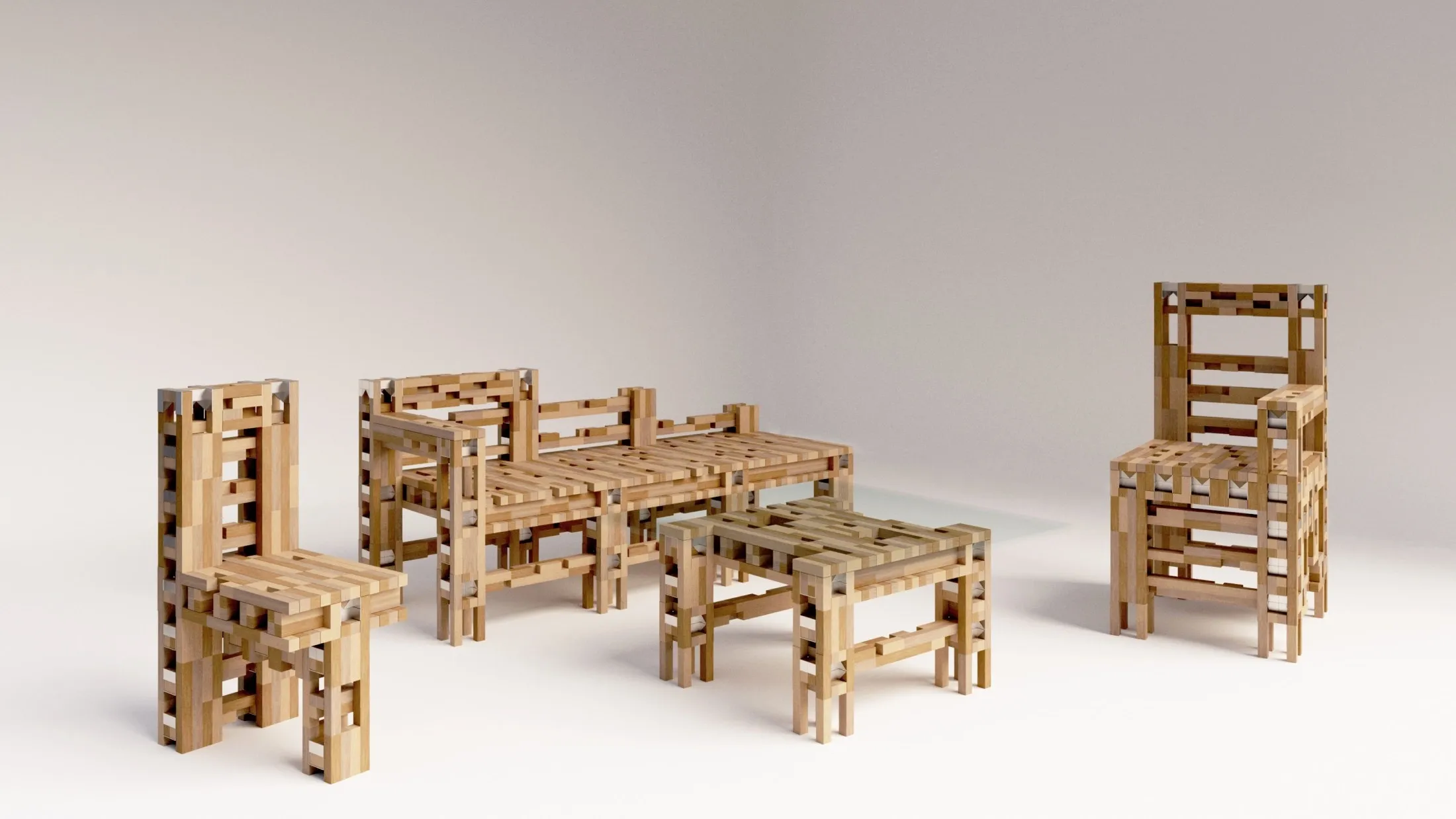
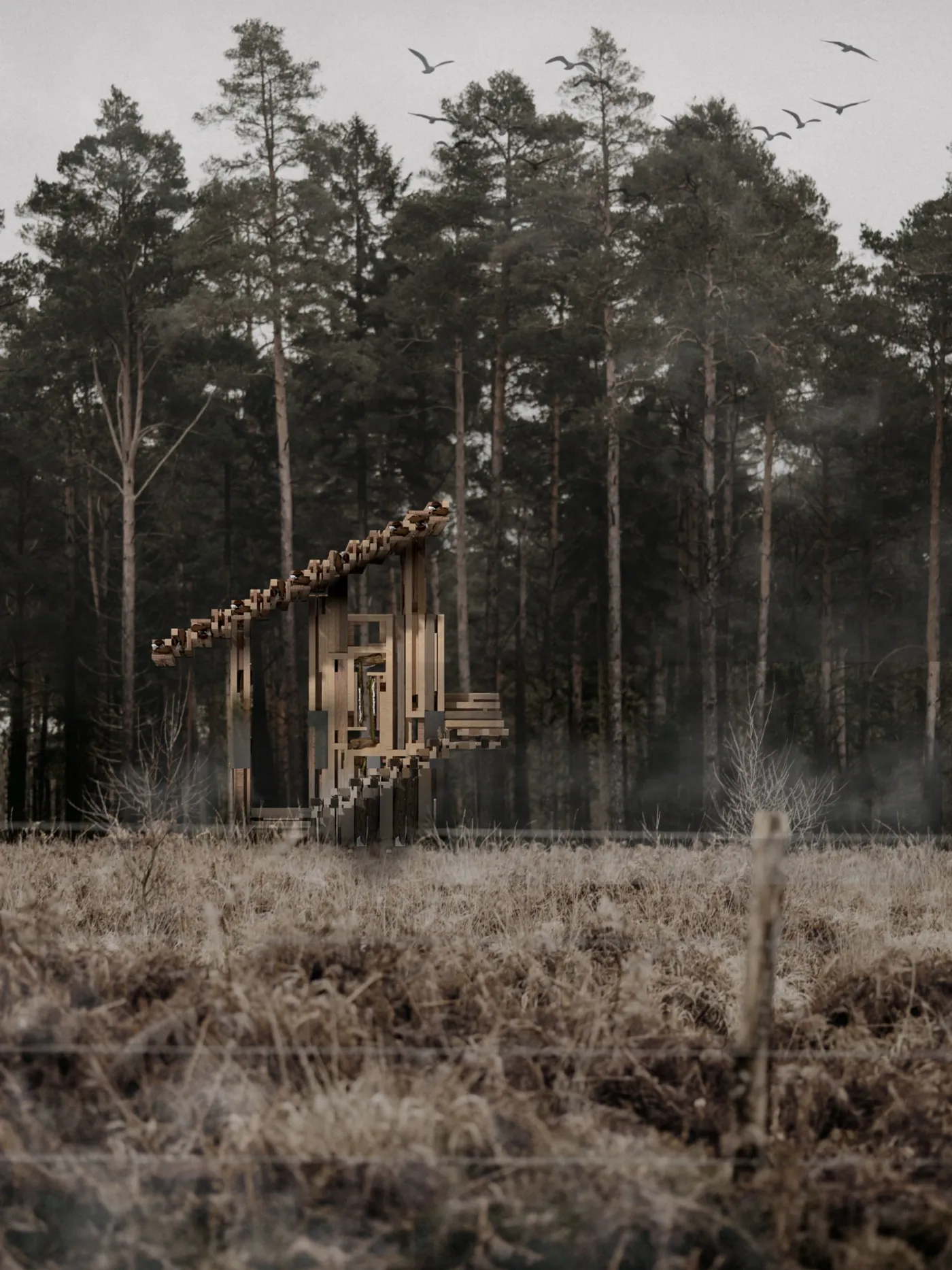
By constraining the allowable aggregation of voxel types according to design parameters, a spatial language emerges that explores the potential for this waste product to become a useful and beautiful building material at multiple scales.