Bio-ComfyUI: A wasp nests-inspired 'Structure-Code DNA' in biomimicry design and fabrication
Abstract
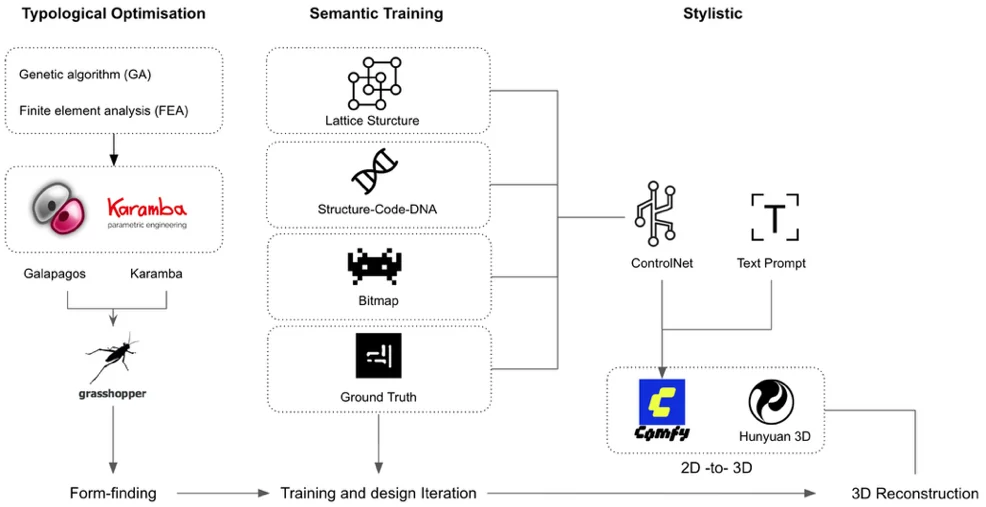
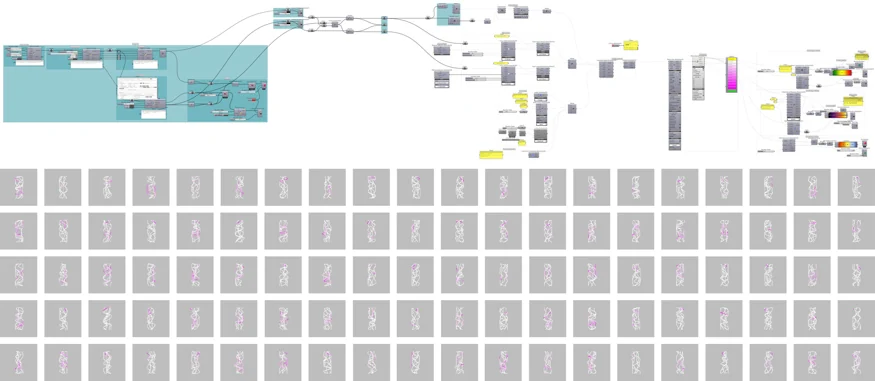
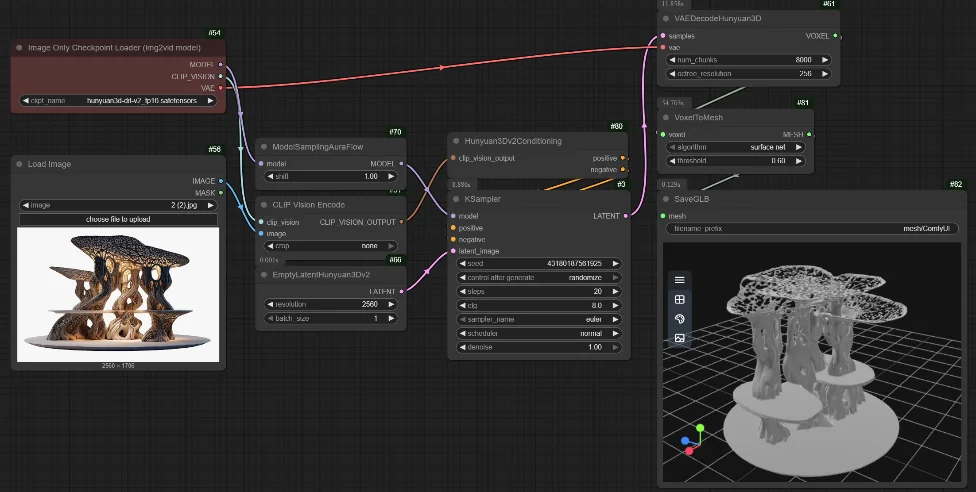
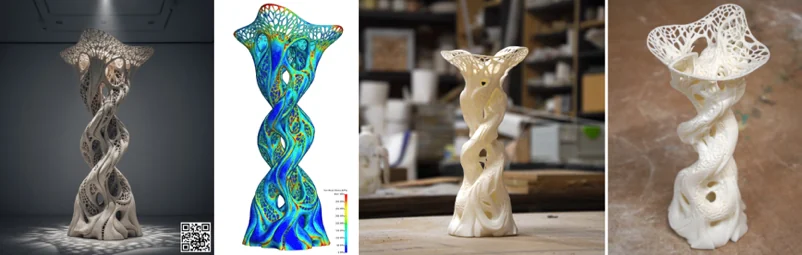
Bio-ComfyUI is a methodological workflow that encodes a "Structure-Code DNA" — a generative logic linking material behaviour, biological growth patterns, and AI-driven form synthesis. The system integrates Finite Element Analysis (FEA), parametric modelling, and multi-conditional diffusion control within ComfyUI to translate structural intelligence into a reproducible design language.
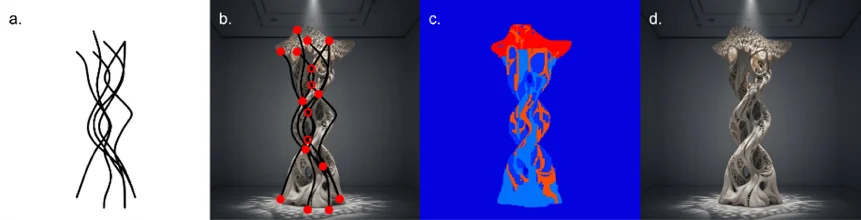
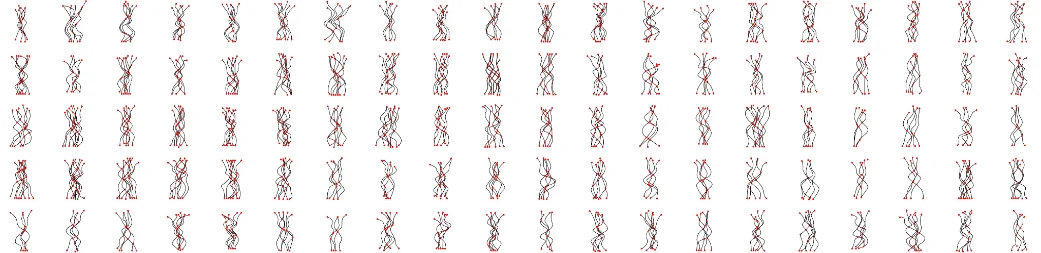
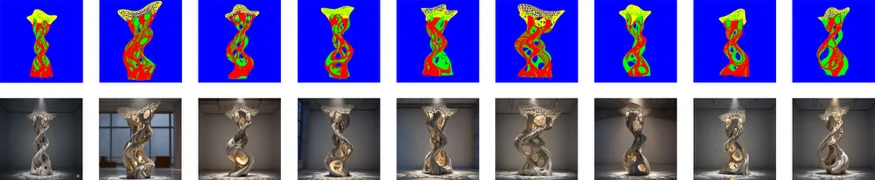
Through four conditioning layers — structural skeleton, topological nodes, semantic bitmap, and stylistic reference — Bio-ComfyUI enables AI to learn and reproduce architectural grammar grounded in both engineering logic and aesthetic formation. The workflow closes the loop from AI generation to FEA validation and robotic fabrication, producing morphologies that are visually expressive yet structurally and materially feasible.
Physical prototypes confirm that the encoded DNA carries embedded structural intelligence, allowing design, analysis, and making to co-evolve within one adaptive system. The research repositions generative AI as an active morphogenetic collaborator, advancing computational biomimicry toward an integrated, self-learning design-to-fabrication ecology.